
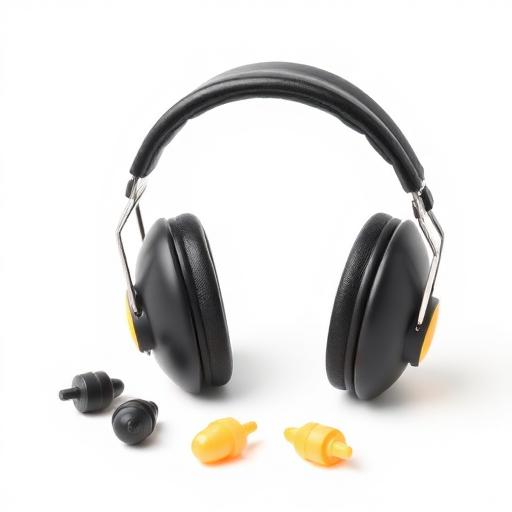
The Critical Importance of Industrial Hearing Protection in Cameroon’s Growing Manufacturing Sector
As Cameroon pursues its Vision 2035 industrialization goals, the manufacturing landscape in hubs like the Douala-Bassa Industrial Zone and the Mvan industrial area in Yaoundé is expanding rapidly. However, this growth brings a significant environmental hazard: occupational noise. In industrial settings ranging from cement production and timber processing in the East Region to large-scale bottling plants in the Littoral, workers are frequently exposed to noise levels that exceed safe physiological limits. Unlike physical injuries that result in immediate pain, Noise-Induced Hearing Loss (NIHL) is often painless and gradual, leading many Cameroonian businesses to underestimate the risk until the damage is irreversible. Protecting the workforce from auditory impairment is not just a moral obligation; it is a legal requirement under the jurisdiction of the Ministry of Labour and Social Security (MINTSS).
Implementing a robust hearing conservation program requires more than just handing out basic earplugs. It involves a technical understanding of noise measurement, the selection of equipment rated for specific decibel levels, and adherence to international safety standards like EN 352 (European) or ANSI S3.19 (American). For HSE managers across the nation, from the port facilities of Limbe to the factories of Bafoussam, mitigating noise pollution is essential for maintaining productivity and avoiding the heavy legal liabilities associated with workplace accidents and occupational diseases. At Cameroon Safety Supplies, we prioritize providing high-performance ear protection that meets these global standards while remaining suited for the humid, high-temperature climates typical of Cameroon’s industrial zones.
Understanding Noise Measurement: Decibels (dB) and Exposure Limits
Noise intensity is measured in Decibels (dB). Because the decibel scale is logarithmic, a small increase in the numerical value represents a massive increase in actual sound pressure. For example, a noise level of 90 dB is ten times more intense than 80 dB. In Cameroon, regulatory frameworks generally follow the international standard of 85 dB(A) as the threshold for an 8-hour Time-Weighted Average (TWA) exposure. Exposure beyond this limit without protection necessitates immediate intervention.
- 85 dB(A): The standard "Action Level." Long-term exposure above this requires a hearing conservation program. (Common in textile weaving or food processing).
- 90-95 dB(A): Found in wood sawmills and metal fabrication shops. Safe exposure time drops to approximately 2 hours without protection.
- 100+ dB(A): Typical of pneumatic drills or heavy heavy machinery in Douala Port operations. Significant damage can occur in less than 15 minutes.
- 140 dB: The "Impact Noise" threshold. Even a single exposure to this level (e.g., an explosion or heavy forge strike) can cause immediate, permanent damage.
To accurately assess risk, HSE officers should conduct periodic noise surveys using Type 2 sound level meters. Assessing the environment is the first step before selecting whether earplugs or earmuffs are the appropriate solution for your specific site.
Interpreting Protection Ratings: SNR vs. NRR
When purchasing PPE from a supplier, you will notice two primary rating systems: SNR and NRR. These ratings indicate how much the equipment reduces the noise reaching the inner ear. Understanding these is vital for ensuring your workers are neither under-protected nor over-protected (which can lead to isolation and inability to hear warning signals).
- SNR (Single Number Rating): This is the European standard (EN 352). If an earmuff has an SNR of 30, it theoretically reduces a 100 dB environment to 70 dB at the ear.
- NRR (Noise Reduction Rating): This is the American standard (ANSI). It typically provides a more conservative estimate than SNR. To calculate the effective protection from NRR in a real-world Cameroonian factory setting, OSHA recommends the formula: (NRR - 7) / 2.
At Cameroon Safety Supplies, we recommend equipment with an SNR of at least 28-32 for high-intensity sectors like logging and heavy construction. Selecting the right rating ensures that workers in the noisy outskirts of Douala or the construction sites of Yaoundé can work safely for a full shift without cumulative auditory damage.
Earmuffs vs. Earplugs: Choosing the Right Gear for Cameroon’s Climate
The choice between earmuffs and earplugs often depends on three factors: the level of noise, the duration of use, and the working environment. In the hot and humid climate of Cameroon, comfort is a major factor in compliance. If PPE is uncomfortable, workers are likely to remove it, leaving them exposed.
Earplugs: Available in disposable foam, pre-molded silicone, or banded styles.
- Pros: Lightweight, inexpensive, and easily compatible with other PPE like welding helmets or safety goggles. Essential for high-humidity areas where earmuffs might cause excessive sweating and skin irritation.
- Cons: Require clean hands for insertion to avoid ear infections (a critical concern in dusty industrial sites); require proper fitting technique to be effective.
Earmuffs: Consist of sound-attenuating cups that fit over the outer ear.
- Pros: One size fits most; very easy to put on and take off; generally provide more consistent protection levels as they are harder to fit incorrectly compared to earplugs.
- Cons: Can be heavy and hot; may interfere with safety glasses or hard hats (though cap-mounted versions exist for use with helmets).
Double Protection: When to Combine Plugs and Muffs
There are extreme environments where a single layer of protection is insufficient. In sectors such as mining in the East or North regions, or during heavy pile driving in coastal infrastructure projects, noise levels can exceed 105 dB. In these scenarios, "Double Protection" is the industry gold standard. This involves wearing earplugs (typically foam) underneath high-attenuation earmuffs.
It is important to note that combining a 30 dB earplug with a 30 dB earmuff does not result in 60 dB of protection. Due to the way sound vibrates through the bone and the physical fit of the devices, double protection usually adds only about 5 to 6 dB of extra attenuation to the higher-rated device. However, in hazardous environments, that 5 dB difference is often the margin between safety and permanent disability.
Fit Testing and Employee Training: The Human Element
The best ear protector in the world is useless if worn incorrectly. A common sight in Cameroonian workshops is foam earplugs barely sitting at the entrance of the ear canal. For a foam plug to work, it must be rolled into a tight cylinder, inserted deeply, and held until it expands to form a seal. Failure to do this can reduce a 30 dB rated plug to essentially 0 dB of protection.
Industrial HSE programs must include a training component where workers are taught:
- How to inspect ear protection for cracks or loss of elasticity.
- The proper "reach over the head" method for earplug insertion.
- Hygiene practices: never sharing earplugs and cleaning reusable earmuff cushions with mild soap to prevent dermatitis.
- Recognizing the signs of "temporary threshold shift"—that muffled feeling or ringing in the ears (tinnitus) at the end of a shift in Douala-Bassa or Limbe.
Compliance with Cameroon Labour Law and MINTSS Regulations
The Ministry of Labour and Social Security (MINTSS) and the National Social Insurance Fund (CNPS) take occupational health seriously. Under the Labour Code in Cameroon, employers are legally mandated to provide a safe working environment. This includes the free provision of appropriate Personal Protective Equipment (PPE). Failure to provide ear protection in a documented high-noise environment can lead to significant fines, suspended operations, and high compensation claims for occupational deafness.
Investing in quality ear protection from a reliable local partner like Cameroon Safety Supplies is more cost-effective than the long-term costs of medical settlements and the loss of skilled manpower. Furthermore, implementing these standards positions your company as a preferred partner for international investors and high-value contracts that require ISO 45001 (Occupational Health and Safety) compliance.
Order from Cameroon Safety Supplies
Protect your workforce and ensure your operations remain compliant with Cameroon's safety regulations. Cameroon Safety Supplies provides a comprehensive range of high-SNR earmuffs, cap-mounted protection, and industrial-grade earplugs tailored for the Central African market. Whether you are managing a brewery in Douala, a milling plant in Yaoundé, or a construction project in the West, we have the technical expertise to support your HSE goals.
Don't wait for a workplace injury to act. Contact our team today for professional advice on noise attenuation and bulk pricing in FCFA.