
Ensuring Heights Safety: Essential Fall Protection Equipment for Cameroon's Telecom and Electrical Tower Workers
In Cameroon's rapidly expanding digital landscape, telecommunications and electrical infrastructure are the backbone of connectivity and power. However, the men and women who build, maintain, and repair these critical towers face significant risks, with falls from height being one of the most severe hazards. At Cameroon Safety Supplies, we understand the unique challenges faced by procurement managers, safety officers, and HSE professionals in Douala, Yaoundé, Limbe, Kribi, Bafoussam, Garoua, and beyond. Providing your teams with the right, high-quality fall protection equipment isn't just a regulatory requirement; it's a moral imperative and a cornerstone of operational efficiency.
This comprehensive guide delves into the essential components of a robust fall protection system, specifically tailored for the demanding environments of telecom and electrical tower work in Cameroon. We'll cover everything from the foundational harness to specialized rescue kits, emphasizing compliance with international standards and practical considerations for our local context.
Understanding the "ABCDE" of Fall Protection: A Holistic Approach
A comprehensive fall protection system isn't just one piece of equipment; it's an integrated approach. We often refer to the "ABCDE" method to ensure all critical elements are considered:
- A - Anchorage: The secure point where the fall protection system is attached.
- B - Body Support: The harness worn by the worker.
- C - Connecting Device: The lanyards, lifelines, or SRLs that link the harness to the anchorage.
- D - Descent/Rescue: Equipment and procedures for rescuing a fallen worker.
- E - Education/Training: Essential for safe use and compliance.
Each component plays a vital role. A weakness in one area can compromise the entire system.
Full Body Harnesses: The Worker's Lifeline
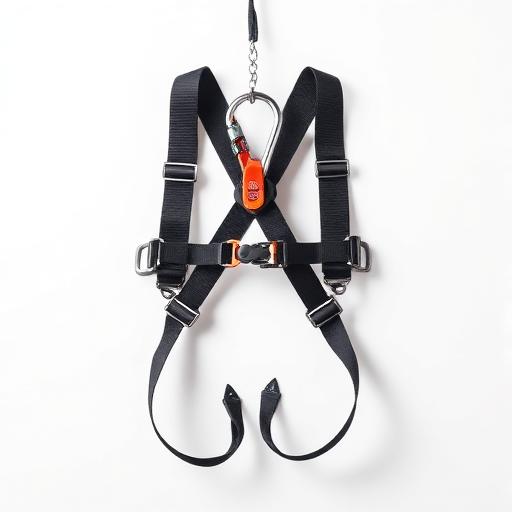
The full body harness is arguably the most critical piece of personal fall protection equipment. Unlike older safety belts, full body harnesses distribute the force of a fall across the worker's thighs, pelvis, chest, and shoulders, significantly reducing the risk of injury. For telecom and electrical tower workers, specific features are paramount:
- D-Rings: Typically, a dorsal D-ring (on the back) is used for fall arrest, while sternal D-rings (on the chest) are often used for climbing or rescue. Side D-rings are crucial for positioning, allowing workers to lean against a structure while keeping their hands free.
- Adjustability: Straps for legs, torso, and chest must be easily adjustable to ensure a snug, comfortable, and safe fit for various body types. Poorly fitting harnesses can lead to serious injury or discomfort during prolonged use.
- Padding: For workers spending hours aloft, padded shoulder, leg, and waist straps are essential for comfort and to minimize fatigue.
- Material: High-strength synthetic webbing (e.g., nylon or polyester) is standard. For environments with potential arc flash hazards, harnesses made from flame-resistant materials are non-negotiable.
- Standards: Always ensure harnesses comply with international standards such as EN 361 (for full body harnesses) and ANSI Z359.11 (for full body harnesses). Cameroon Safety Supplies stocks only certified harnesses, guaranteeing their performance and reliability.
When selecting harnesses for your team in Douala or Yaoundé, consider the specific tasks. Are they primarily climbing, or also performing work positioning? This will dictate the necessary D-ring configurations.
Connecting Devices: Lanyards, SRLs, and Lifelines
Connecting devices are the link between the worker's harness and the anchorage point. The choice depends on the specific task, available anchorage, and overall fall distance considerations.
Energy Absorbing Lanyards
These are the most common connecting devices for fall arrest. They incorporate an energy absorber that deploys during a fall, significantly reducing the force exerted on the worker's body. Key considerations:
- Length: Typically 1.5 to 2 meters (5-6 feet). It's crucial to calculate fall clearance, including harness stretch, lanyard extension, and buffer distance.
- Double-Leg Lanyards (Y-Lanyards): Essential for 100% tie-off, allowing workers to remain continuously connected while traversing structures or moving between anchor points (e.g., "leapfrogging").
- Snaphooks/Carabiners: Must be self-locking and self-closing. For large rebar hooks or scaffold hooks, ensure they have sufficient gate opening and strength.
- Material: Webbing or rope, often with a protective sheath for durability.
- Standards: Look for EN 355 (energy absorbers) and EN 354 (lanyards), or ANSI Z359.13 (energy absorbing lanyards).
Self-Retracting Lifelines (SRLs)
Often referred to as "fall limiters," SRLs automatically extend and retract, keeping tension on the lifeline and minimizing free fall distance. They lock up quickly in the event of a rapid acceleration, similar to a car's seatbelt. SRLs are highly favored for their short arrest distance and ease of use, especially in environments with limited fall clearance. Modern SRLs are increasingly compact and durable, suitable for the rough conditions encountered on telecom towers.
Vertical Lifelines and Rope Grabs
For vertical climbing on fixed ladders or similar structures, vertical lifelines (often rope or cable) combined with automatic rope grabs offer continuous fall protection. The rope grab follows the worker as they ascend or descend, locking instantly in a fall. These systems are commonly seen on permanent tower installations.
Anchorage Connectors: The Unseen Foundation
An anchorage is only as strong as its attachment point. For tower work, suitable anchorages might include structural members, engineered anchor points, or specialized slings wrapped around components. It is paramount that the anchorage point can withstand the forces of a fall. ANSI Z359.2 and EN 795 standards specify that anchorages must be capable of supporting 5,000 lbs (22.2 kN) per worker or meet engineered design criteria with a safety factor of at least two.
- Beam Clamps: Temporary or permanent clamps that attach to structural beams.
- Anchor Slings: Strong webbing or cable slings that can be choked around structural elements.
- Fixed Anchor Points: Permanently installed D-rings or other connectors that have been certified by an engineer.
Regular inspection of anchor points, especially on older towers around Bafoussam or Garoua, is critical.
Descent and Rescue Equipment: Preparing for the Unthinkable
A fallen worker suspended in a harness faces the critical risk of suspension trauma (orthostatic intolerance). Prompt rescue is not just about retrieving the worker; it's about saving their life. Every site must have a detailed rescue plan and the necessary equipment readily available.
Basic Rescue Kit Components:
- Self-Contained Rescue Devices: These allow a rescuer to safely descend to a fallen worker and then lower them to the ground using a controlled descent mechanism. Examples include pre-rigged rescue kits with haul systems.
- Ascenders & Descenders: For more complex rope rescue operations.
- Webbing/Slings & Carabiners: For creating anchor points or patient packaging.
- Cutting Tools: For cutting rope in an emergency.
- First Aid Kit: Essential for post-rescue care.
Training on fall protection is incomplete without robust training on rescue. Cameroon Safety Supplies can advise on reputable training providers in Cameroon for heights rescue. Remember, time is of the essence in a rescue situation. Having pre-rigged rescue kits on site, especially in remote areas outside of Limbe or Kribi, can be a lifesaver.
Beyond the Equipment: Inspection, Maintenance, and Training
Even the best equipment is useless if it's not properly maintained or if workers aren't trained to use it. At Cameroon Safety Supplies, we emphasize a holistic approach to fall protection:
- Pre-Use Inspection: Workers must inspect their harnesses, lanyards, and other components before each use for cuts, fraying, chemical damage, heat damage, or deployed energy absorbers.
- Periodic Inspection: A competent person should conduct thorough inspections of all fall protection equipment at least annually, or more frequently depending on usage and environmental conditions. Any equipment that has arrested a fall or shows signs of damage must be immediately removed from service.
- Storage: Equipment should be stored in a clean, dry, cool place, away from direct sunlight, chemicals, and extreme temperatures.
- Training: Comprehensive training is non-negotiable. Workers need to understand:
- How to properly don, adjust, and inspect their equipment.
- The principles of fall clearance and potential fall hazards.
- The proper use of connecting devices and anchorage points.
- Emergency procedures, including self-rescue and assisted rescue.
- The effects of suspension trauma and preventative measures.
- Documentation: Maintain detailed records of equipment inspections, maintenance, and training. This is crucial for compliance and demonstrating due diligence.
The Cameroon Safety Supplies Advantage for Cameroon
As a leading supplier of PPE in Cameroon, Cameroon Safety Supplies is uniquely positioned to meet the specific needs of telecom and electrical tower companies. We offer:
- Certified Equipment: All our fall protection equipment is sourced from reputable international manufacturers and complies with relevant ISO, ANSI, and EN standards, ensuring your workers are protected by globally recognized safety solutions.
- Local Stock & Logistics: With our operations in Douala, we maintain a robust inventory, minimizing lead times and ensuring timely delivery of critical equipment to sites across Cameroon, from the bustling port of Kribi to the remote towers near Garoua. We understand the logistical challenges and strive to provide efficient service.
- Expert Consultation: Our team is knowledgeable about fall protection requirements and can assist procurement managers and safety officers in selecting the right equipment for their specific applications and budgets. We can discuss your needs in FCFA and provide comprehensive quotes.
- Comprehensive Range: From entry-level harnesses to advanced rescue kits and specialized accessories, we offer a complete range of fall protection solutions to build or enhance your safety program.
Conclusion: Prioritizing Safety at Every Height
The risks associated with working at height on telecom and electrical towers are significant but entirely manageable with the right equipment, training, and commitment to safety. Investing in high-quality, compliant fall protection equipment is not an expense; it's an investment in your workforce's well-being, your operational continuity, and your company's reputation. At Cameroon Safety Supplies, we are dedicated to partnering with you to ensure that every tower worker in Cameroon returns home safely at the end of their shift.
Don't compromise on safety. Equip your team with the best. Request a free quote from Cameroon Safety Supplies today and let us help you build a safer working environment at every height.