
Ensuring Work-at-Height Safety: Fall Protection Solutions for Cameroon’s Oil & Gas Sector
The Oil and Gas industry remains the backbone of Cameroon’s economy, with intensive operations ranging from the offshore platforms in the Rio del Rey basin and Bakassi Peninsula to the downstream refining processes at SONARA in Limbe. However, these environments present high-risk scenarios, particularly regarding work performed at height. Fall-related incidents are among the leading causes of workplace fatalities globally, and in the humid, corrosive marine environments of the Gulf of Guinea, the integrity of safety equipment is constantly under threat. Adhering to strict international standards such as EN 361 and ANSI Z359 is not merely a legal requirement by the Ministry of Labour and Social Security; it is a critical necessity for preserving human life and ensuring operational continuity. At Cameroon Safety Supplies, we specialize in providing peak-performance fall protection systems tailored to the specific climatic and industrial needs of Cameroon’s energy sector.
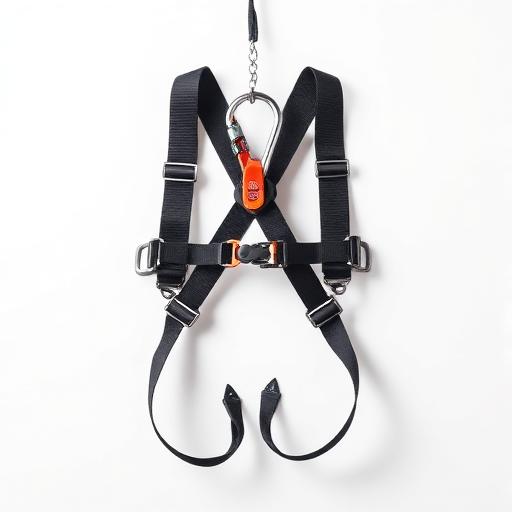
The Anatomy of a Full-Body Safety Harness (EN 361)
In the Oil and Gas sector, a simple waist belt is never sufficient for fall arrest. A full-body harness meeting the EN 361 (European) or ANSI Z359.11 (American) standard is the only acceptable solution for preventing free-fall injuries. These harnesses are designed to distribute the kinetic energy of a fall across the strongest parts of the body: the thighs, pelvis, chest, and shoulders.
- D-Ring Placement: A dorsal (back) D-ring is standard for fall arrest, while sternal (chest) D-rings are often required for climbing fixed ladders on oil rigs or during offshore transfers.
- Material Durability: Given the high salinity in coastal regions like Limbe and Kribi, harnesses used in Cameroon must feature corrosion-resistant hardware (often stainless steel or coated alloys) and UV-resistant polyester webbing to prevent degradation from the intense tropical sun.
- Specialized Coatings: For workers at SONARA or those handling chemicals, harnesses with liquid-resistant coatings (oil-and-dirt repellent) are recommended to extend the lifespan of the PPE and prevent chemical weakening of the fibers.
Shock-Absorbing Lanyards and Self-Retracting Lifelines (SRLs)
The harness is only one part of the system. To safely stop a fall, the connection between the harness and the anchor point must include a deceleration device. In Cameroon’s offshore platforms, space is often restricted, making the choice of connector vital for "fall clearance" calculations.
- Shock-Absorbing Lanyards: These feature an internal core that expands during a fall, reducing the impact force to under 6kN (kiloNewtons). These are ideal for workers with ample clearance below them.
- Self-Retracting Lifelines (SRLs): Often called "inertia reels," these work similarly to a car seatbelt. They stop a fall within centimeters, making them the preferred choice for maintenance work on high-pressure vessels or storage tanks in Douala’s industrial hubs.
- Twin-Leg Lanyards: Essential for 100% tie-off, allowing a technician to move from one point to another while remaining constantly attached to a secure structure.
Anchor Points and Horizontal Lifelines in Harsh Environments
An expensive harness and lanyard are useless if the anchor point fails. In the Oil and Gas context, securing an anchor point involves navigating complex steel structures, pipes, and derrick towers. Temporary anchor straps must be rated for at least 5,000 lbs (22.2 kN) according to ANSI standards.
For permanent installations, such as walkways on offshore platforms or loading bays at petroleum depots in Yaoundé and Bafoussam, horizontal lifelines are the gold standard. These systems allow workers to move horizontally along a track without disconnecting. However, because many Cameroon-based facilities are exposed to salt spray, these lifelines must be constructed from Grade 316 stainless steel. Cameroon Safety Supplies works with procurement managers to ensure that the hardware supplied can withstand the specific oxidation levels found in the Littoral and Southwest regions.
Inspection Routines and Maintenance for Offshore Use
In the humid climate of Cameroon, PPE inspection is a daily priority. The combination of humidity, heat, and potential chemical exposure can lead to "hidden" damage in fall protection equipment. Companies must implement a two-tier inspection process:
- Pre-Use Inspection: Conducted by the worker before every shift. They must check for "pulled" stitch patterns, burns, chemical softening of webbing, and any deformation in the D-rings or buckles.
- Competent Person Inspection: According to international regulations, a detailed, documented inspection must occur at least every 6 to 12 months. In the corrosive environment of an offshore rig in Bakassi, this frequency is often increased to every 3 to 4 months.
- The "Red Flag" Rule: If a harness has been involved in a fall, even if it looks undamaged, it must be removed from service immediately and destroyed to prevent accidental reuse.
The Regulatory Landscape and Cost Efficiency in Cameroon
Compliance with fall protection standards is not just about safety; it is about avoiding the heavy fines and project shutdowns that can be imposed by Cameroon’s Ministry of Labour and Social Security (MINTSS). Operating with uncertified equipment can lead to insurance claim denials and legal liabilities that far outweigh the cost of premium PPE.
While some firms might be tempted by low-cost, unbranded equipment, the total cost of ownership (TCO) tells a different story. High-quality harnesses from reputable brands supplied by Cameroon Safety Supplies are built to last longer in tropical conditions, reducing the frequency of replacement. Investing 150,000 FCFA to 250,000 FCFA in a premium fall protection kit is a minor expense compared to the millions of FCFA in lost man-hours and medical costs resulting from a single fall incident.
Order from Cameroon Safety Supplies
As a leading provider of industrial PPE in Cameroon, Cameroon Safety Supplies understands the unique challenges of the Oil and Gas sector. Whether you are outfitting a maintenance crew at SONARA, a drilling team offshore in the Bakassi Peninsula, or a logistics team in the Port of Douala, we provide certified EN and ANSI fall protection equipment that guarantees safety and compliance.
Don't leave your workers' lives to chance. Our technical team can help you select the right harness, lanyard, and anchor configurations for your specific site requirements. Contact us today for competitive bulk pricing and expert advice tailored to the Central African market.
Protect your team and secure your operations by clicking the link below: