
Enhancing Respiratory Safety Protocols in Cameroon’s Rapidly Expanding Cement Industry
The cement industry serves as the backbone of infrastructure development in Cameroon, driving the construction of highways, commercial hubs in Douala, and residential projects in Yaoundé. However, the production of "grey gold" comes with significant occupational hazards, primarily in the form of airborne particulates. From the crushing of limestone to the final packaging of Portland cement at major facilities like Cimencam, Dangote, and Medcem, workers are daily exposed to high concentrations of cement dust and crystalline silica. Without rigorous respiratory protection programs, this exposure leads to irreversible health conditions, including silicosis, chronic obstructive pulmonary disease (COPD), and occupational asthma. For Cameroonian industrial managers, adhering to the safety guidelines set by the Ministry of Labour and Social Security is not just a legal obligation but a critical operational necessity to maintain a healthy, productive workforce.
Understanding Respiratory Hazards: Silica Dust and Particulates
In cement manufacturing plants across the Littoral and South-West regions, the primary respiratory threat is respirable crystalline silica (RCS). When raw materials like limestone, clay, and shale are crushed and heated in kilns, they release microscopic particles that are often invisible to the naked eye. These particles are small enough to penetrate deep into the alveolar sacs of the lungs.
- Alveolar Damage: Silica dust causes scarring of the lung tissue, known as fibrosis, which reduces the lungs' ability to extract oxygen.
- Chemical Irritation: Cement is highly alkaline. When inhaled, it reacts with the moisture in the respiratory tract, causing chemical burns and chronic inflammation of the mucous membranes.
- Long-term Latency: Occupational lung diseases often take years to manifest. A worker in a Bafoussam distribution hub today might only show symptoms of respiratory distress a decade later.
To mitigate these risks, Cameroonian safety officers must categorize areas of the plant based on dust concentration, ensuring that the level of Personal Protective Equipment (PPE) matches the atmospheric hazard in accordance with EN 149 standards.
Selecting the Right Protection: FFP2 vs. FFP3 Respirators
Disposable respirators, commonly referred to as filtering facepieces (FFP), are the first line of defense in lower-risk zones of a cement plant, such as loading bays or administrative offices near production lines. In the context of Cameroon's humid climate, choosing the right grade is essential for both safety and compliance.
- FFP2 Masks: These are suitable for environments with moderate levels of fine dust. They provide a Minimum Filtration Efficiency of 94% and are often used during general masonry or bagging operations where dust is present but not concentrated.
- FFP3 Masks: In high-risk zones, such as during the cleaning of kilns or maintenance of bag filters, FFP3 masks are mandatory. They offer a 99% filtration efficiency and are the only disposable option rated for highly toxic particulates like silica.
- Valved vs. Unvalved: Given the high temperatures in Douala and Limbe, Cameroon Safety Supplies recommends respirators equipped with exhalation valves. These valves reduce heat and moisture buildup inside the mask, significantly improving worker comfort and compliance during long shifts.
Advanced Protection: Half-Masks with P3 Particle Filters
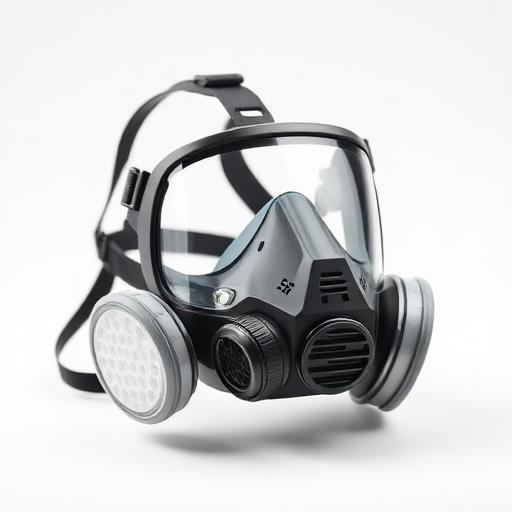
For workers stationed in the heart of the production process—such as those managing the clinker cooling systems or performing heavy-duty maintenance—disposable masks are often insufficient. In these scenarios, reusable Half-Masks (meeting EN 140 standards) equipped with replaceable P3 filters (meeting EN 143) are the industry gold standard.
These respirators offer several advantages for Cameroon’s industrial sector:
- Superior Seal: Reusable masks are made from medical-grade silicone or TPE, providing a more airtight fit compared to disposable fabric masks.
- Cost-Efficiency: While the initial investment in a high-quality half-mask is higher in FCFA, the long-term cost is lower. Instead of discarding an entire mask every shift, companies only need to replace the P3 filter canisters.
- Integration: Modern half-masks are designed to be "low profile," allowing them to be worn comfortably alongside safety goggles and hard hats without obstructing the field of vision.
At Cameroon Safety Supplies, we prioritize stocking twin-filter masks which balance the weight on the face, reducing neck strain for workers operating in the demanding environments of Cameroonian cement plants.
The Critical Importance of Fit Testing and Maintenance
The most advanced P3 filter in the world is useless if the mask does not fit the wearer's face properly. Contaminated air will always follow the path of least resistance, leaking through gaps between the skin and the mask seal. For Cameroonian employers, implementing a "Fit Test" protocol is a vital step in respiratory safety.
Regular maintenance schedules must also be enforced. In the dusty environment of a cement plant, filters can become "clogged" or loaded. Signs that a filter needs immediate replacement include:
- Increased breathing resistance (the wearer feels they have to struggle to pull air through the filter).
- Physical damage to the mask straps or face seal.
- Detection of the smell or taste of dust inside the mask.
Storage is equally important; respirators should be stored in clean, airtight containers when not in use to prevent the filters from absorbing ambient humidity and dust, which is a common issue in the coastal regions of Cameroon.
Regulatory Compliance and the Role of Cameroon Safety Supplies
Adhering to the Loi n° 92/007 du 14 août 1992 (Labour Code of Cameroon) regarding health and safety at work requires companies to provide appropriate PPE free of charge. Furthermore, the Ministry of Labour emphasizes that equipment must be certified to international standards like CE (European) or ANSI (American) to ensure it can withstand industrial stressors.
As a leading provider in the sub-region, Cameroon Safety Supplies understands the specific logistical challenges faced by cement producers in Douala, Yaoundé, and beyond. We ensure that our inventory of respiratory protection—from basic FFP2 dust masks to sophisticated full-face respirators—meets rigorous international safety benchmarks. By sourcing through specialized local suppliers, companies avoid the risks associated with counterfeit or substandard PPE that often floods the local markets, ensuring their workers are truly protected against the invisible threat of silica dust.
Order from Cameroon Safety Supplies
Is your facility properly equipped to handle the respiratory demands of cement production? Protecting your workforce from silica dust and industrial particulates is a critical investment in your company’s future. Cameroon Safety Supplies provides high-performance, certified respiratory protection to industrial sites across Cameroon, ensuring compliance with both local regulations and international safety standards.
Don't leave your workers' health to chance. Contact our technical team today to discuss your site requirements, bulk pricing in FCFA, and delivery options to Douala, Yaoundé, or Bafoussam. Get a free quote for your respiratory PPE needs and secure your site against occupational hazards.